
Plasterer Melbourne
All Melbourne Handyman provides residential and commercial plastering across Melbourne, from patching a single hole to replacing a sagging ceiling or lining a new room. Our plasterers repair the damage, set and sand the surface smooth, and leave it ready for paint.


Plastering Services
Plastering Services in Melbourne
We work on plasterboard, lath and plaster, and solid plaster walls and ceilings in homes, rentals, shops and offices. The work covers:
- Plaster repairs for cracks, holes, dents and water damage.
- Ceiling repairs, including sagging and water-stained ceilings.
- Plasterboard installation for new walls, ceilings and renovations.
- Cornice repair and replacement, including decorative profiles.
- Internal plastering, solid plastering, external rendering and ornamental work.
Because we are a handyman business as well as plasterers, one team handles repairs and the trade work. If a stud is rotten, a door stop has punched through the wall or a leak has damaged the ceiling, we fix the cause before the plaster goes on.
Repairs
Plaster Repairs in Melbourne
Small damage turns into bigger repairs if it is left, especially once moisture gets in. We repair:
- Cracks. Hairline cracks are raked out, taped and set. Recurring cracks at joints or corners are re-taped so they do not open again.
- Holes and dents. Door handle holes, removed fixtures and knocks are backed, patched and set flush with the wall.
- Blown plaster. Sections of solid plaster that have come away from the brick sound hollow when tapped. We remove the loose area and replaster it.
- Water damage. Stained, soft or bubbling plaster is cut out and replaced once the leak is fixed.
For a plaster repair near you, we match the finish of the surrounding wall, so the repair disappears once it is painted.

Need a Plasterer in Melbourne?
How We Work
Our Plastering Process
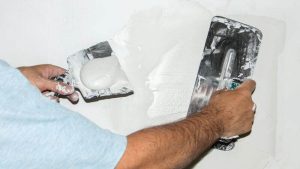
Every job follows the same steps, whether it is a small patch or a full ceiling.
What to expect
1. Assessment and protection
We inspect the damage, find the cause and cover floors and furniture against dust.
2. Repairs and preparation
Loose plaster, damaged board and failed tape are removed, and any timber behind is repaired.
3. Base coats
Joint compound is applied in thin coats, each one left to dry before the next.
4. Sanding and checking
The surface is sanded smooth and checked in raking light, so bumps and ridges show up before paint does.
5. Finish and clean-up
The final coat is feathered into the wall, and we clean up and leave the area ready to paint.



Ceilings
Ceiling Repairs in Melbourne
Ceilings suffer from leaks, age and movement in the roof. Common problems include cracked joints, stained patches from roof or bathroom leaks, cornices pulling away and sagging sheets.
A sagging ceiling is a warning sign. The sheet has usually lost its fixing to the battens or joists, often because of water or failed adhesive. Keep people out from under it and call us to inspect it. Depending on the damage, we re-fix the sheet, replace the affected section or replace the whole ceiling.
Water-stained ceilings need the leak fixed first. Once the area is dry, we replace any soft board, reset the joints and seal the stain so it does not bleed through the new paint.
New Plasterboard
Plasterboard Installation and New Walls
We install new plasterboard for renovations, extensions, partition walls and bulkheads. That includes moisture-resistant board for bathrooms and laundries, and square-set or cornice finishes for ceilings.
New sheets are fixed to the frame, the joints are taped and set in stages, and the corners are finished with metal or paper beads for a straight, crisp edge. The result is a smooth, level surface ready for painting.


Plaster Repairs and Painting by One Team


Period Homes
Cornices, Lath and Plaster, and Period Homes
Many older Melbourne homes still have lath and plaster ceilings, solid plaster walls and decorative cornices. These need a different approach from modern plasterboard.
- Cornice repair. Cracked or missing sections are replaced with a matching profile where one is available, and joints are set so the run looks continuous.
- Lath and plaster. Cracks and loose sections are stabilised or replaced, and larger failing areas can be over-sheeted with plasterboard.
- Solid plaster and render. Blown sections are removed and replastered to match the existing wall.
- Decorative finishes. Venetian plaster and ornamental work add texture and detail to feature walls.
Why Cracks Appear
Why Plaster Cracks in Melbourne Homes
Plaster cracks for a reason, and fixing the cause stops the crack coming back. Common causes are:
- Ground movement. Many Melbourne suburbs sit on reactive clay that swells when wet and shrinks when dry. The house moves with it, and cracks open above doors and windows.
- Seasonal changes. Timber frames expand and contract with temperature and humidity, which shows up at plasterboard joints.
- Poor original work. Joints that were not taped properly, or screws too far apart, show as lines and popped screws.
- Leaks. Water from the roof, a shower or a plumbing leak softens plaster and board.
For more on what to look for, read our guide to hiring a professional plasterer.
Cracks that keep getting wider, or doors that start to stick at the same time, can point to movement that needs a closer look. Call 0422 094 891 and we will inspect it before we patch it.

What Affects the Cost of Plastering
The price of a plastering job depends on:
- Size and number of repairs. One patch costs less than several rooms of cracks.
- Type of plaster. Lath and plaster and solid plaster take longer to repair than plasterboard.
- Ceiling height and access. High ceilings and stairwells need scaffolding or extra set-up.
- Cause of the damage. Water damage or rotten framing needs fixing before plastering.
- Finish level. Walls in strong light or under gloss paint need a finer finish.
- Painting. Whether you want the repaired area painted as part of the job.
Every quote is itemised, so you can see what is included before any work starts.

Plastering and Painting by One Team
A plaster repair is not finished until it is painted. Our team also paints, so the same crew can repair the plaster and repaint the wall or ceiling, with no gap between trades. See our painters in Melbourne page, or read how we get smooth plastered walls in Melbourne homes.
Our plasterers work across Melbourne, typically within about 30 km of the CBD, including Richmond, North Melbourne and bayside suburbs such as Elwood. If you are searching for a plasterer near me elsewhere in Melbourne, call to check availability. Plastering is one part of our wider range of handyman services in Melbourne.
One team, one quote
Timber repairs, plastering and painting are handled by the same crew, under one quote.
Itemised quotes
Your free, no-obligation quote lists each repair, the finish and any painting separately.
Fully insured
All Melbourne Handyman is fully insured for the plastering work we carry out on your property.
A Recent Plastering Job
A recent job in the City of Melbourne involved a number of cracks and holes in plasterboard walls and a ceiling. Our plasterer assessed the damage and repaired all of the cracks and holes in a single day.
Frequently Asked Questions
How much does a plasterer cost in Melbourne?
The cost depends on the number and size of the repairs, the type of plaster, access and whether the cause, such as a leak, needs fixing first. We give a free, itemised quote after seeing the damage, so the price reflects your actual job.
Can you repair lath and plaster ceilings?
Yes. We stabilise or replace cracked and loose sections of lath and plaster. Where a large area is failing, it can be over-sheeted with plasterboard, which keeps the ceiling in place and gives a smooth new surface.
Why does my plaster keep cracking?
Recurring cracks usually come from movement in the house, such as reactive clay soil or timber frames expanding and shrinking. A crack filled without re-taping the joint tends to open again. We find the cause and repair it so it holds.
How long does plaster take to dry before painting?
It depends on the product and the conditions. Joint compound is applied in thin coats that each need to dry, and cool, damp weather slows it down. We tell you when the repair is ready to paint, or paint it ourselves.
Is a sagging ceiling dangerous?
It can be. A sagging sheet has lost its fixing and may come down, especially if it is wet. Keep people out from under it and have it inspected so it can be re-fixed or replaced.
Book Your Plastering Quote
Whether it is one hole behind a door, a water-stained ceiling or a room of cracked walls, we will fix the cause, repair the plaster and leave it ready for paint. Call 0422 094 891 to book a free plastering quote.
